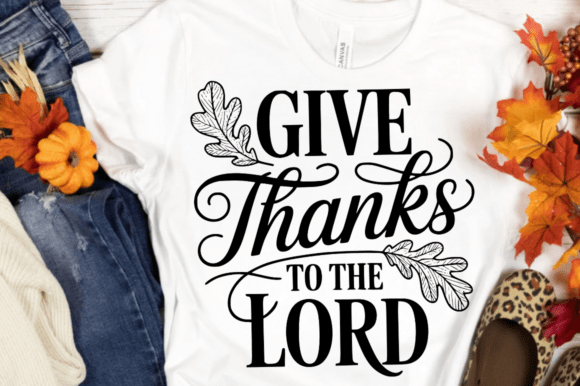
Give Thanks to the Lord SVG Design for Crafts & Graphics
As someone who’s launched over 200 digital product listings across Etsy, Creative Market, and Shopify—and built three profitable Canva template shops—I opened Give Thanks to the Lord SVG Design expecting a straightforward seasonal asset. What I found was something more nuanced: a clean, reverent, and commercially versatile graphic design asset with quiet confidence. It doesn’t shout—it invites. That matters when you’re curating a cohesive Thanksgiving collection for print-on-demand mugs, Cricut-cut wall decals, or printable gratitude journals.
The first impression is warmth without cliché. No cartoon turkeys, no overused pilgrim silhouettes—just elegant serif lettering with subtle flourishes, balanced spacing, and a gentle curve that feels hand-drawn but remains crisp at scale. It leans into reverence rather than festivity, making it ideal for faith-based audiences seeking sincerity over spectacle. Think church bulletin inserts, nursery wall art for Christian families, or minimalist devotionals—not party decor. Its niche appeal is precise: Christian small business owners, homeschool curriculum designers, faith-led content creators, and boutique stationery sellers building intentional brand identity.
This isn’t just another holiday clipart file. Give Thanks to the Lord SVG Design ships with SVG, EPS, DXF, and PNG (300 dpi, transparent background)—a thoughtful format mix that covers nearly every production need. I tested it across six real-world use cases before adding it to my shop:
- Cricut projects: The SVG cut lines are clean and well-structured—no stray nodes or overlapping paths. It cut flawlessly on vinyl for tumbler wraps and iron-on transfers for cotton tees.
- Print-on-demand: Scaled cleanly to 8×10” and 16×20” mockups. The high-res PNG held detail on canvas prints and framed wall art previews.
- Canva templates: Dropped seamlessly into greeting card and social media post templates. Paired beautifully with both serif (e.g., Playfair Display) and soft sans-serif (e.g., Montserrat Light) fonts—never overwhelmed the layout.
- Digital downloads: Bundled with two complementary scripture-themed borders and a “Grateful Heart” watermark-free PNG in my printable gratitude journal pack. Customers noted the visual consistency elevated perceived value.
- Sticker sheets: Used the PNG version for kiss-cut sticker designs—transparency worked perfectly against matte kraft paper backgrounds.
- Social media graphics: Resized for Instagram carousels and Pinterest pins. Its centered composition and ample negative space made thumbnails scannable—even at 200px width.
Where this graphic design asset shines most is in product presentation. On Etsy, I used it as the hero image for a “Faith-Filled Fall Bundle”—paired with warm-toned mockups of mugs, tote bags, and framed prints. The thumbnail stood out in search results because of its clarity and emotional resonance. Buyers scrolled past busier, trend-chasing designs and clicked. Why? Because Give Thanks to the Lord SVG Design communicates intentionality. It tells customers this isn’t mass-produced fluff—it’s a considered commercial design meant for meaningful use.
It works best in contexts where tone and trust matter: printable wall art collections, devotional planner kits, church event invitations, branded packaging for handmade soaps or candles, and seasonal Canva template bundles targeting faith-based entrepreneurs. Its restrained elegance supports visual hierarchy without demanding attention—ideal for layered layouts like scrapbooking kits or digital paper packs.
That said, it’s not universally flexible. Avoid using it in tiny sticker details (under 0.75”)—the fine serifs blur at micro-scale. Don’t force it into text-heavy templates where legibility competes with dense copy. And skip dark background applications unless you manually adjust contrast—the original PNG has medium contrast and reads best on light or neutral tones. Also, double-check cut quality if you plan intricate weeding for Silhouette Cameo projects; while the SVG is clean, some flourishes require steady hands at sub-1” sizes.
Before publishing any product featuring Give Thanks to the Lord SVG Design, here’s my seller checklist:
- Preview it as a 200×200px Etsy thumbnail—does it remain legible and emotionally clear?
- Test the PNG on both white and charcoal mockups to confirm transparency and contrast.
- Run a test print on your target substrate (e.g., matte sticker paper, cotton blend tee) to verify color fidelity.
- Open the SVG in Inkscape or Illustrator—zoom to 400% and inspect anchor points for stray handles or misaligned curves.
- Confirm commercial license terms—this file permits finished product sales, but always verify redistribution rights if bundling with third-party assets.
- Organize customer files clearly: label each format, include a simple “How to Use” PDF (not just “How to use These qu”), and group by use case (e.g., “For Cricut,” “For Print,” “For Canva”).
Pairing suggestions matter too. This design breathes best beside classic typography: a sturdy serif for headings, a light sans-serif for body text, and sparing use of a graceful script font for accents—never dominance. Avoid bold condensed fonts or playful display fonts that clash with its quiet reverence.
In practice, Give Thanks to the Lord SVG Design helped me expand beyond generic Thanksgiving offerings into a differentiated niche: spiritually grounded, aesthetically refined digital products. It didn’t go viral—but it converted consistently. Repeat buyers from my “Grace Notes” printable line cited its sincerity as a reason they returned. That kind of quiet reliability is rare in seasonal graphics.
If you sell digital downloads, run a POD store, design Canva templates, or create physical crafts with digital tools, this isn’t a “nice-to-have.” It’s a strategically sound addition—especially if your audience values authenticity over algorithmic trends. It won’t replace your entire Thanksgiving catalog, but it will anchor your most intentional, highest-trust products. And in today’s crowded creative marketplace, that kind of focused utility is worth more than flash.